
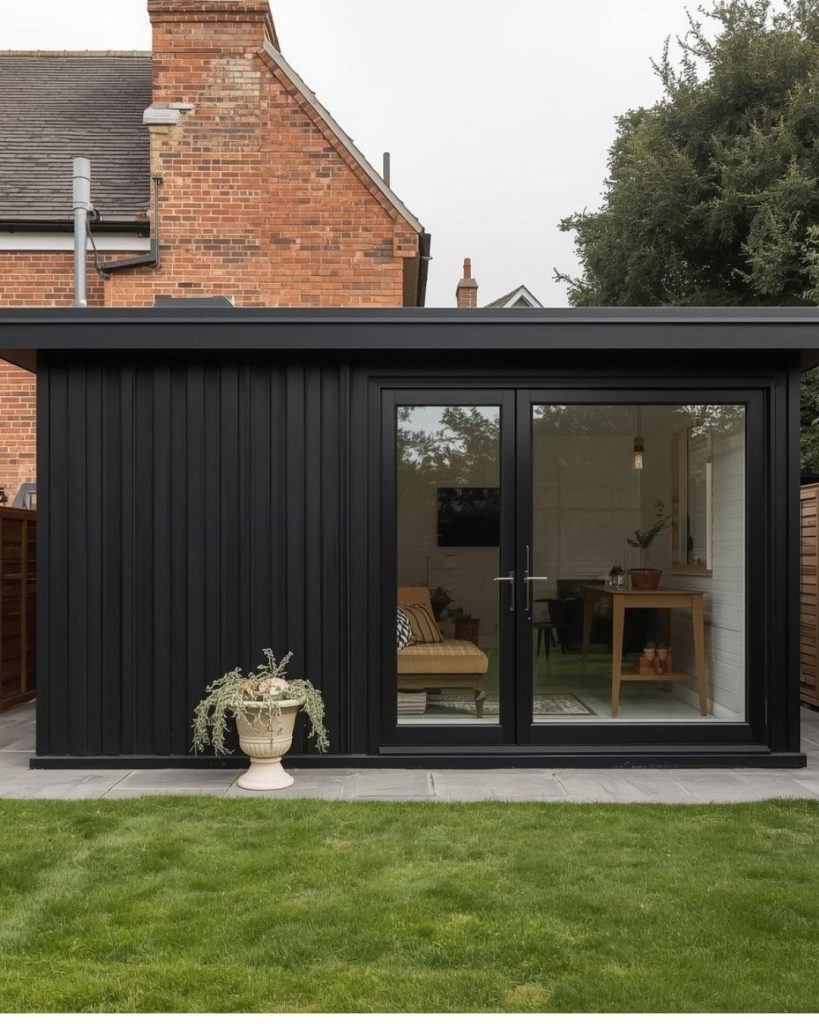
How Much Does a Garden Room Cost in Peterborough?
Garden rooms have established themselves as one of the most consistently popular home improvements across Peterborough and the surrounding Cambridgeshire area — and the demand shows no sign of slowing. The combination of hybrid working becoming permanently embedded in how many households operate, the practical need for dedicated space separate from the main house, and the consistently strong return that a well-specified garden room adds to a property’s value have all driven demand across the city’s varied residential areas.
The challenge is that the garden room market covers an enormous range in both price and quality. A flat-pack timber structure at one end can be bought online and assembled over a weekend. A properly designed, fully insulated, permanently built garden room at the other end is a building that will perform year-round for decades. The gap in price between these two ends of the market is significant. So is the gap in usefulness, durability and long-term value.
Peterborough’s housing stock — spanning the post-war estates of Bretton, Paston and Werrington through to the newer detached housing of Hampton, Yaxley and the surrounding villages, and the older period properties closer to the city centre and Cathedral Quarter — has a significant proportion of properties with rear gardens suited to garden room installation. Understanding what a properly built garden room costs in this part of Cambridgeshire, and what determines where within the price range your project sits, is the starting point for making a decision that you will not regret.
What Does a Garden Room Cost in Peterborough?
For a properly constructed, fully insulated garden room with electrics and a finished interior, realistic current prices in the Peterborough area from a reputable local builder are:
- Small garden room (up to 12 sqm): £11,500–£19,000
- Medium garden room (12–20 sqm): £18,000–£30,000
- Large garden room (20–30 sqm): £28,000–£46,000+
These are complete installed prices covering everything from groundwork and foundations through to a finished, electrified interior. They do not cover bespoke fitted furniture, wet room installations, specialist acoustic treatment or high-end glazing upgrades — these are costed as additions.
Peterborough sits broadly in line with the East Midlands and East of England market for construction labour — more affordable than the Home Counties and well below London rates, but above the rural parts of Cambridgeshire and Lincolnshire. For PE1 to PE7 postcodes and the surrounding area, the figures above represent realistic current pricing from an established local contractor.
What Drives the Price?
Foundations and Ground Conditions
The foundation is the element of a garden room project that most commonly produces surprises — and Peterborough’s ground conditions are more variable than many homeowners expect. The city sits on the edge of the Fens, and the ground beneath rear gardens across different parts of the city varies considerably. The higher ground around Bretton, Longthorpe and the southern expansion areas tends to be firmer. The lower-lying areas towards the Nene flood plain, the Fens edge and the northern parts of the city sit on softer, more compressible soils that require more careful foundation design.
For the newer developments across Hampton and Yaxley where made ground from development activity is more common, a ground assessment before foundation design is finalised is a sensible precaution. A concrete raft or pad foundation on stable ground typically adds £1,100–£2,000 to the overall project cost. On softer or more variable ground, engineered solutions can add £2,500–£4,500. A builder who assesses the ground before quoting — rather than assuming standard conditions across all sites — is giving you a more reliable price.
Size and Footprint
The cost per square metre of a garden room reduces as the size increases — the fixed costs of foundation, electrical connection, doors and windows are spread across a larger floor area as the room gets bigger. A small room costs more per square metre to build than a medium room of identical specification.
Irregular footprints — L-shaped plans, angled rooflines, buildings that step around existing garden features — add cost relative to a straightforward rectangle of the same total area. For homeowners where budget is a priority, a simple rectangular plan is consistently the most cost-effective geometry. Rooms over 30 sqm move into territory where planning permission is more likely to be required regardless of other conditions — which adds professional fees and a determination period to the project timeline.
Insulation Specification
This is the area where the difference between a good garden room and a disappointing one is most consistently felt — and the area where cheaper builds cut corners most aggressively. Peterborough’s climate is not mild. The city sits in one of the coldest and most exposed parts of England — the Fenland location means cold easterly and northerly winds are a regular feature of autumn, winter and early spring, and there is little in the way of topographic shelter. An inadequately insulated garden room in this climate is a building that cannot be used comfortably for five or six months of the year.
The difference between a room with proper year-round insulation — 100mm of rigid insulation in the floor, 100mm mineral wool or PIR board in the walls, 150mm or more in the roof — and one with the 50mm budget insulation common in cheaper kit builds is not subtle. Upgrading from basic to proper year-round insulation typically adds £1,500–£3,200 to a medium-sized garden room. For a room that will be used regularly as a home office, gym or studio, this additional cost pays back through lower heating bills and dramatically improved comfort within a few years of use. For the Peterborough climate in particular, this is not an optional upgrade — it is the specification the building needs to function as intended.
Cladding and External Finish
The external cladding determines how the building looks and how much maintenance it requires over its lifetime. Treated softwood is the standard starting point — cost-effective and attractive when freshly treated, but requiring treatment or restaining every three to five years. In Peterborough’s exposed climate, particularly for gardens on open plots on the city’s edges or across the Fens where wind and driving rain are more significant, softwood that is not consistently maintained shows its age faster than in a sheltered urban garden.
Siberian larch or western red cedar costs more upfront — typically £1,200–£2,500 extra — but weathers naturally without any maintenance intervention, developing a silver-grey patina as it ages. Composite cladding adds £1,800–£4,000 over a softwood specification but is completely maintenance-free for the life of the building. For gardens in shadier positions where timber retains moisture and is more prone to algae growth, composite is a particularly practical choice.
Glazing and Door Specification
Full-width aluminium bi-fold or sliding doors across the main elevation — the most popular choice — currently cost £2,000–£5,000 fitted depending on width and panel count. Standard French doors are less expensive and suit certain building styles well. Rooflights and roof lanterns are worth considering for garden rooms that do not benefit from direct south-facing light — adding meaningful natural light in the greyer months that Peterborough sees plenty of between October and March. A single quality rooflight fitted into a flat roof typically costs £450–£1,400.
Electrical Specification
The base electrical package — a sub-consumer unit, a circuit of double sockets and ceiling lighting — is included within the price ranges above. Additional electrical provision needs to be specified and priced separately. Underfloor heating adds £1,200–£2,800. A split air conditioning unit adds £1,200–£3,000. External lighting adds £300–£900. Data cabling for a wired network connection adds £250–£600. All electrical work requires Part P notification from a registered electrician — this should be included as standard in any reputable builder’s quote.
Planning Permission and Building Regulations in Peterborough
The majority of garden rooms on residential properties across Peterborough fall within permitted development and do not require a planning application. The conditions are: single storey only, eaves height not exceeding 2.5m, total height not exceeding 4m for a dual-pitched roof or 3m for any other roof form, the building covering no more than half the total garden area, and no use as self-contained residential accommodation.
The 2.5m eaves height condition applies with particular force to buildings positioned within 2m of a boundary — a commonly missed constraint that affects garden rooms positioned close to side or rear fences. For properties in designated areas, or where PD rights have been removed by a planning condition, a full application to Peterborough City Council is required. Some of the newer estates across Hampton and the city’s southern expansion areas were built with planning conditions that restrict permitted development — worth checking before assuming PD applies.
Building regulations are not required for most single storey garden rooms under 30 sqm positioned at least 1m from any boundary with no sleeping accommodation. The electrical installation requires Part P notification regardless of the building’s size.
Is a Garden Room Worth It in Peterborough?
For most Peterborough homeowners with a practical rear garden, the answer is clearly yes — provided the specification is right. A garden room built to a proper standard adds dedicated, usable space to a property that serves its intended purpose every day of the year. A building that cuts corners on insulation or cladding is one that costs more to run, requires more maintenance, and disappoints within a few years of what should have been a long-term investment.
If you are based in Peterborough, Hampton, Yaxley, Market Deeping, Stamford, Whittlesey or anywhere across the surrounding Cambridgeshire area, get in touch and we will come out to look at your garden and give you a clear quote based on what you want to build. Get in touch to arrange a visit.